
Play and Win-Win Cash Prizes!
Numbase SAL OffshoreTrivia
3.7700.00 Reviews
- Version
- 4.05
- Installs
- 1.00M
- Age Rating
- Everyone
Screenshots
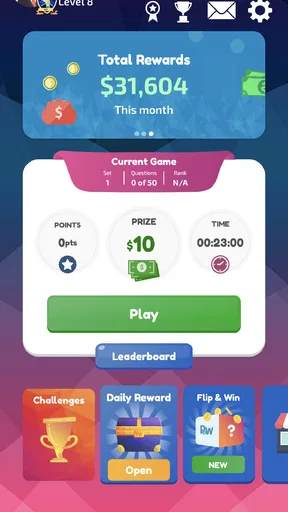
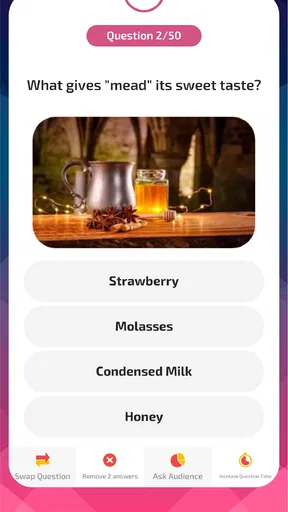
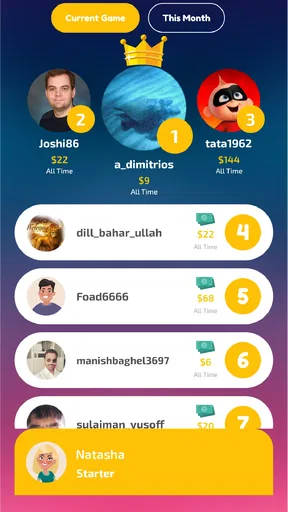
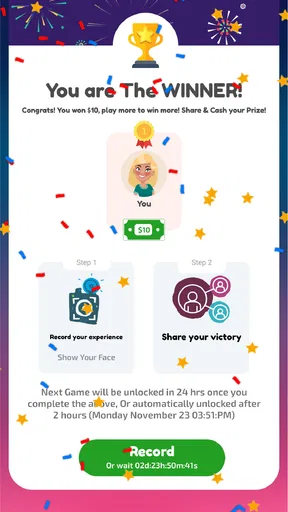
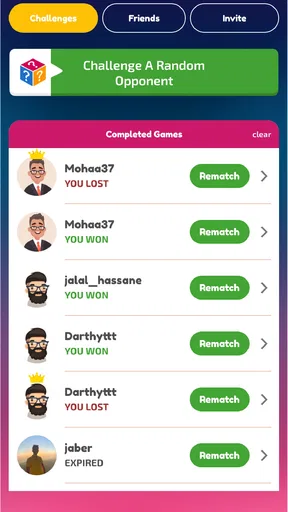
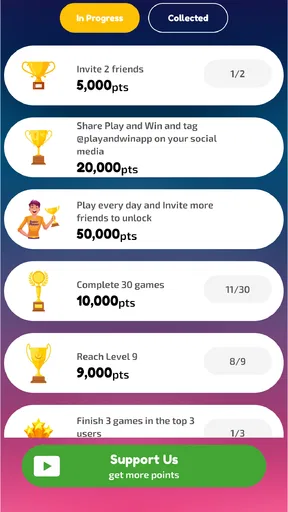
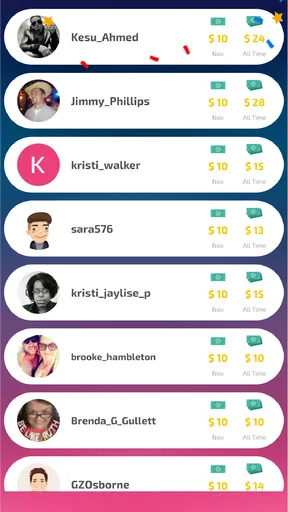
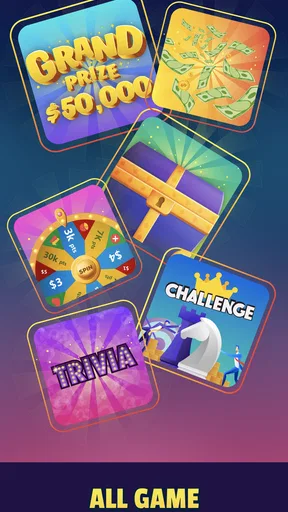
Our Review of Play and Win-Win Cash Prizes!
 Analysis by Appyee
I approached Play and Win-Win Cash Prizes! as a quick trivia game rather than a full-length gaming experience, and that distinction matters. It is free to start, built around answering questions, collecting points, and competing for the possibility of cash prizes. The basic appeal is easy to understand: open the game when you have a few spare minutes, test what you know, and see whether your score can carry you ahead.
My first impression was that it suits people who enjoy short bursts of general-knowledge entertainment. You do not need to learn a complicated control scheme or spend time building a character. The challenge is mental and immediate. At the same time, I would not treat it like a guaranteed way to earn money. The prize angle adds excitement, but the real day-to-day value is the quiz itself, especially if you enjoy answering under pressure.
What the game feels like when you begin
The game comes from Numbase SAL Offshore and is listed as a trivia title for everyone. It has been available since July 18, 2018, and its reach is substantial, with more than a million installs. That history gives it the feel of an established casual quiz product rather than a brand-new experiment, although its average rating of 3.7 shows that the experience is not universally loved.
I think the best way to set expectations is to picture a compact quiz session. You are there to answer questions, build a points total, and aim for a stronger result than the people or scores you are competing against. The store positioning focuses on winning cash prizes, but a sensible player should see that as a possible reward connected to performance, not as the only reason to install it.
The game is free, which makes trying it straightforward. Optional purchases range from $0.99 to $7.99 per item. I would be careful with those purchases during the first few sessions. Before spending anything, I would want to understand exactly what an item changes, whether it improves convenience or merely encourages another attempt, and whether the extra cost fits the way I actually play.
Because the content rating is Everyone, it is approachable for a broad audience. That does not mean every question will be equally comfortable for every player. Trivia naturally moves between subjects and difficulty levels, so a player who knows a lot about one topic may still have uneven results. I found that variety more interesting than a narrow specialist quiz, but it also means a bad round may reflect the question mix rather than a lack of ability.
The right mindset for the prize element
The phrase “win cash prizes” can easily create the wrong expectation. I would enter with the goal of playing well first and treating any prize opportunity as a bonus. That mindset protects the fun of the game and makes it easier to judge the experience fairly. If you are looking for a predictable income source, this is not the right type of app. If you like trivia and enjoy the extra tension of a competitive reward, the format makes more sense.
There is also a useful difference between knowledge and quiz technique. Knowing an answer is important, but reading the question carefully, avoiding rushed taps, and managing uncertainty can matter just as much. I often find that the most frustrating mistakes are not gaps in knowledge but answers chosen too quickly because the wording looked familiar.
Getting through the first setup without overthinking it
On the first launch, I recommend taking a calm minute to look around before trying to chase a high score. Find where a round begins, where your points are shown, and where any prize or purchase information appears. This early inspection is worthwhile because a prize-focused trivia game can place several important choices close together, and a hurried tap may start something before you understand it.
I would also check the current version shown on your device. The listed current version is 4.05, and the game supports devices running Android 7.0 or later. That makes it accessible to many older Android phones, but compatibility is not the same as identical performance. If your phone is older, I would close other demanding apps before playing and give the game a few minutes to show whether transitions and question loading feel comfortable.
The first setup is not the time to buy anything. Play a free session, notice how quickly questions appear, and learn how the scoring feels. This gives you a reference point for judging optional items later. Without that reference, it is easy to assume a purchase is necessary simply because the game presents it at an exciting moment.
New users may also wonder whether they need to be trivia experts. In my experience, no. A broad but imperfect knowledge base is enough to make the opening enjoyable. You will probably recognize some answers immediately, hesitate over others, and miss a few that seem obvious only after the round ends. That mixture is normal for this kind of game and is part of what keeps a short session from becoming completely predictable.
A practical first-session routine
Start with a free round and concentrate on understanding the question flow rather than maximizing points.
Read each prompt completely before choosing an answer, especially when two options look similar.
After the round, look at how your result was presented and note what caused mistakes.
Play again only after deciding whether the game itself is enjoyable without a purchase.
This routine sounds simple, but it prevents the most common beginner error: confusing the excitement of a prize opportunity with proof that the game is worth paying into. The first meaningful success should be a clean, informed round in which you understand what you are doing and feel that your score reflects your choices.
How I would approach the first successful round
For a first-time user, success should not mean immediately winning a cash prize. A more realistic milestone is completing a round with deliberate answers and a score you can explain. That gives you something useful to build on. If you miss a question, remember the subject and the wording rather than simply feeling that the round went badly.
I recommend using a two-pass mental approach. On the first pass, answer questions where you are confident and avoid letting one difficult prompt consume your attention. On the second, slow down on anything uncertain and compare the choices carefully. This is not a hidden feature; it is a practical way to reduce careless errors in a timed or competitive trivia environment.
Another helpful habit is separating confidence from speed. A fast answer is not automatically a better answer. When I recognize a topic, I still check whether the question asks for a person, place, date, definition, or exception. Trivia games often make familiar subjects difficult by changing the exact angle of the question.
If the game presents a chance to continue, retry, or enter a more rewarding situation, I would pause and read the wording before proceeding. The important question is not only “Can I play again?” but also “What am I committing to?” Look for whether the action uses a purchase, affects the current result, or simply begins another free attempt. Understanding that difference is especially important in an app connected to cash-prize expectations.
My first satisfying session would be one where I finish, review the result, and know whether I want another round. That may sound modest, but it is a strong test. A good trivia game should remain engaging even when a prize is not immediately involved. If the questions themselves do not hold your attention, spending more will not solve that problem.
Turning mistakes into a better second attempt
I would not replay immediately after every wrong answer just to recover a score. Instead, I would identify the type of mistake. Was the subject unfamiliar? Did I misread the question? Did I change a correct instinct because I panicked? Each cause suggests a different response. Only the first one is a knowledge gap; the others are habits that can improve quickly.
This is one of the less obvious strengths of a trivia app: it can become a small daily learning exercise if you pay attention to your misses. I would keep a short mental note of recurring areas, such as geography, history, entertainment, or science, and use that pattern to decide whether the game is helping me discover new facts. I would not expect a formal study course, but the quiz format can still make general knowledge practice more enjoyable.
Where new players may become confused
The biggest possible confusion is the relationship between points and cash prizes. Points are part of the game’s competitive structure, but a high point total should not automatically be interpreted as money already earned. I would read every prize-related screen carefully and distinguish between scoring, eligibility, ranking, and any action that involves spending.
A second source of uncertainty is the meaning of optional purchases. The available items cost between $0.99 and $7.99 each, but the price alone does not tell me whether an item is useful. I would only consider one after several free sessions, when I knew whether it addressed a real annoyance. If I cannot clearly describe what I am buying and why it improves my experience, I would skip it.
Some players may also assume that a broad trivia game should have a perfectly even difficulty curve. That is rarely how these experiences feel in practice. One round can seem comfortable, while the next exposes a weak subject. I would judge the game over multiple sessions rather than using a single unusually easy or difficult round as the final verdict.
The rating of 3.7 from roughly 18 thousand ratings gives a useful signal: plenty of people have tried it, but the response is mixed. Around 700 written reviews add more context than the average alone, yet I would still focus on whether the current experience matches my expectations. Ratings can reflect different attitudes toward prizes, purchases, question quality, and competition, so they are best treated as a warning to evaluate the game personally rather than as a simple yes-or-no answer.
Another practical question is whether it works for family play. The Everyone rating makes it suitable for a broad audience, and trivia can be fun to discuss together. However, I would not assume that every session is ideal for a group. If the game relies on individual timing or personal scoring, family members may enjoy comparing results more than sharing one device. For a relaxed group quiz, a dedicated pass-and-play alternative may be better.
When another trivia option may suit you better
I would choose a traditional trivia app instead if my main goal were quiet practice, detailed explanations, or a structured learning path. This game’s prize-oriented design adds urgency, but that may be distracting for someone who wants to study at their own pace. Likewise, if I wanted a purely social quiz with friends, a multiplayer title built specifically around private rooms could be a better fit.
On the other hand, many standard quiz apps lack the extra tension created by points connected to prize opportunities. That is where this game has a distinct appeal. It gives a casual trivia session a reason to feel more consequential, even when I am only playing for a few minutes. The trade-off is that I need to pay closer attention to the rules and purchase prompts than I would in a simple offline quiz.
A realistic everyday use case
Imagine having a short break between errands. I would open the game, play one free round, and use the result as a quick mental reset. If I answered well, I could try another session while the subject matter still felt fresh. If the questions were frustrating or the prize flow seemed unclear, I could close it without having lost money or much time.
That scenario matches the game better than a long evening session. Trivia works well in small portions, and the possibility of collecting more points gives a five-minute break a clear purpose. I would avoid playing while distracted, though. Answering while walking, commuting, or multitasking makes careless mistakes more likely, and the competitive format rewards attention.
For a student, the game could be a light way to review general knowledge between study tasks, but I would not substitute it for subject-specific revision. For a trivia fan, it can add a little pressure to familiar quiz play. For someone who dislikes uncertainty around rewards, the prize focus may make the experience feel less relaxing than an ordinary question-and-answer app.
Parents should also remember that an Everyone rating describes broad content suitability, not a promise that children will understand every prize or purchase screen. If a child uses the game, I would supervise any part involving optional items and explain that points and prize opportunities are not the same as guaranteed earnings.
Who should install it and who should pass
I would recommend giving it a try if you enjoy general trivia, like chasing a better score, and are comfortable treating cash prizes as an extra possibility rather than a promise. It is especially suitable for players who want short sessions without learning complicated mechanics. The free entry makes that trial relatively low-risk, provided you resist buying anything before understanding the game.
I would hesitate to recommend it to someone seeking a dependable rewards app. I would also point cautious users toward a standard trivia alternative if prize-related screens, optional purchases, or competitive pressure make them uncomfortable. Players wanting deep explanations, a formal curriculum, or a guaranteed offline experience may find another category of quiz app more satisfying.
The game is also not ideal for anyone who becomes frustrated by uneven knowledge areas. A broad trivia format will eventually ask about subjects you do not follow. The better question is whether you enjoy discovering those gaps. If every unfamiliar question feels unfair, the experience may become tiring quickly.
My suggested next step after the trial
After two or three free sessions, I would make a simple decision: continue because the questions are enjoyable, or stop because the prize promise is doing all the work. If I continue, I would set a personal spending limit before looking at the optional items. That limit should be based on entertainment value, not on the hope of recovering the cost through winnings.
I would also choose a consistent playing situation, such as a quiet break at home, and compare scores only when I am equally focused. This makes improvement easier to judge. A higher result may come from better concentration, a friendlier question mix, or genuine learning, and noticing the difference keeps expectations realistic.
One useful final check is whether I can explain the game to a friend in plain language: it is a free trivia game where I answer questions, collect points, and explore prize opportunities while deciding carefully about optional purchases. If that sounds appealing, the app is worth trying. If the only attractive part is the idea of cash, I would skip the download and choose a quiz game whose rewards are simply knowledge and entertainment.
Overall, I see Play and Win-Win Cash Prizes! as a casual trivia experience with an added competitive hook. Its free starting point, Everyone rating, long availability, and large install base make it easy to test, while the mixed 3.7 average suggests that expectations should stay realistic. I like it most when I treat each round as a focused quiz first and a prize opportunity second.
My honest recommendation is to start slowly, learn the scoring and prize flow, and keep purchases optional. If you enjoy the questions without spending, you have found a useful little time-filler. If the game only feels worthwhile when money is involved, a conventional trivia alternative will probably give you a clearer and more comfortable experience.
Verdict
Strengths of Play and Win-Win Cash Prizes!
- Simple gameplay makes it easy for new players to get started.
- Offers a variety of games to keep the experience from feeling repetitive.
- Prize-based challenges can make casual play feel more rewarding.
- The interface is colorful and easy to navigate.
- Suitable for short gaming sessions during spare time.
Limitations of Play and Win-Win Cash Prizes!
- Cash rewards may vary and are not guaranteed for every player.
- Some features or contests may require in-app purchases.
- Availability of cash prizes can depend on your location.
- Ads may interrupt gameplay or appear between activities.
- Players should review withdrawal rules before investing time or money.
Similar Picks in This Category
View All
Millionaire 2026 Quiz & Trivia
Quiz & Trivia Games by Submarine Apps4.5

Brain Test 2: Tricky Stories
Unico Studio4.7

Trivia Crack: Brain Quiz Games
etermax4.4

QuizzLand. Quiz & Trivia game
Quiz & Trivia Games by Mno Go Apps4.8

Brain Test: Tricky Puzzles
Unico Studio4.7

Logo Quiz
bubble quiz games4.5
Frequently Asked Questions
What is Play and Win-Win Cash Prizes!?
Play and Win-Win Cash Prizes! is a casual rewards-style game that lets users play short challenges, complete activities, and potentially earn prizes based on their performance. The app is designed for quick sessions rather than long gaming campaigns, so it may appeal to users who enjoy simple entertainment with a competitive element. Available rewards, eligibility, and participation rules can vary by country and should be checked inside the app.
Can I really win cash prizes with this app?
The app may offer opportunities to receive cash prizes or other rewards, but winning is not guaranteed. Results can depend on your score, tournament ranking, promotional conditions, and the specific rules attached to each activity. Before spending significant time or money, review the reward terms carefully, including minimum withdrawal limits, processing times, eligible regions, and any restrictions that could affect whether a prize can actually be claimed.
Is Play and Win-Win Cash Prizes! free to download and use?
The application may be free to install, although some features, contests, advertisements, or optional purchases could be available after downloading it. A free installation does not necessarily mean every activity is completely free. We recommend checking the app’s store listing and in-app screens for information about entry fees, subscriptions, virtual items, or other charges. Always confirm payment details before approving a transaction.
How do withdrawals and prize payments work?
Withdrawal procedures depend on the app’s current payment system and the user’s location. You may need to reach a minimum balance, verify your identity, provide accurate payment information, and comply with age or regional requirements before requesting a payout. Processing can take time, and some methods may include limitations or fees. Read the official withdrawal policy in the app before relying on expected earnings.
Is Play and Win-Win Cash Prizes! safe for my device and personal information?
As with any rewards or gaming application, you should review the permissions, privacy policy, developer information, and recent user feedback before installing. Avoid providing unnecessary personal details, and never share passwords or payment credentials outside the app’s official channels. Download only from a trusted store, keep your operating system updated, and be cautious of unofficial websites or messages promising guaranteed prizes or faster withdrawals.
Play our best games!


